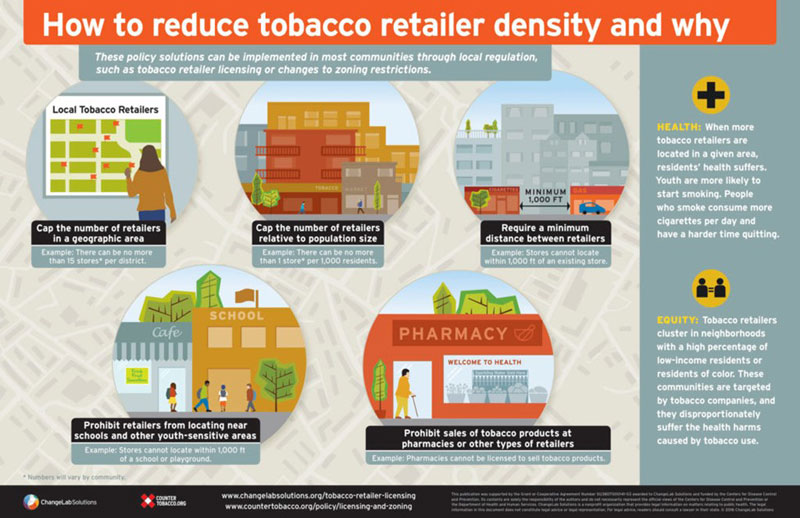
A recent article in the Daily Gazette focused on the rising concern over the saturation of tobacco retailers in the Capital District. Capital Region cities, particularly in low-income, minority, and youth-populated areas, face an oversaturation of tobacco retailers compared to affluent suburbs. Hamilton Hill, a low-income neighborhood in Schenectady has 18 active tobacco retailers serving just 7,500 residents. In contrast, Niskayuna, a more affluent community in Schenectady has only 3 active tobacco retailers.
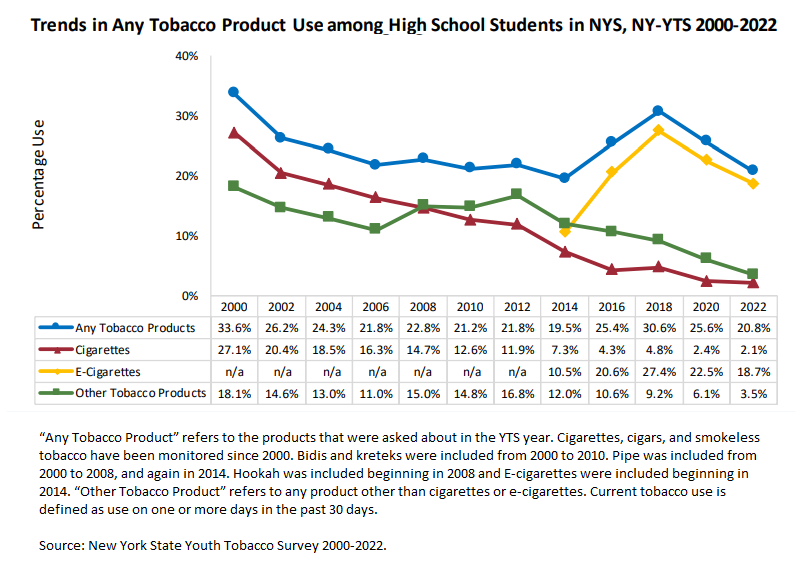
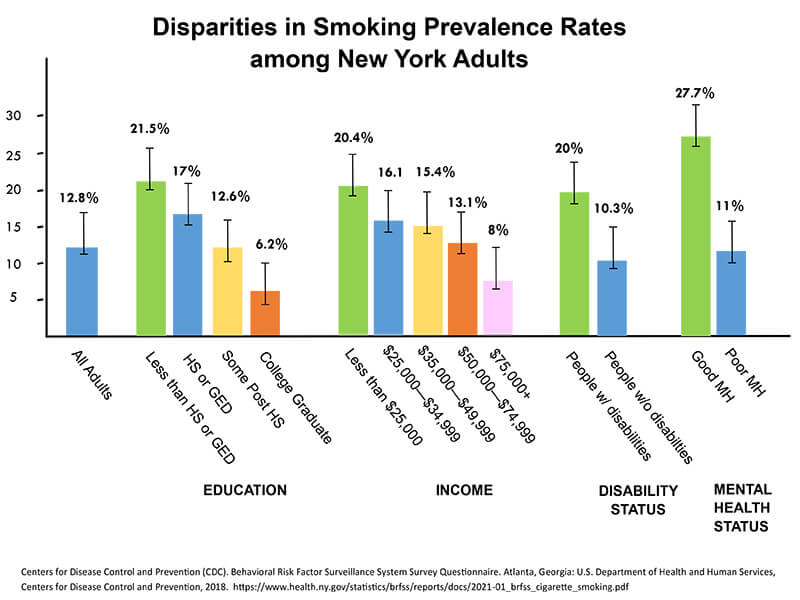
While overall state tobacco use is declining, concerns exist over rising youth “openness” to smoking, the proliferation of new products like nicotine pouches, and the concentration of retail outlets in urban neighborhoods. Minority communities continue to use the products at a disproportionate rate, which studies and experts say is the result of years of targeted advertising.
Local municipalities have also taken steps to limit tobacco retailers, including the city of Schenectady, which approved an ordinance in 2024 limiting where smoke shops can be located. Niskayuna has prohibited tobacco sales within 1,000 feet of schools, while the town of Bethlehem in Albany County approved a similar ordinance in 2020 that requires tobacco retailers to obtain a local license to sell tobacco and nicotine products.
Our director Jeanie Orr is quoted in the article: “Having the product readily available and in your face like this, it really makes it harder for people who do want to quit, and of course it entices young people to start.”
Tobacco remains the leading preventable cause of death in the U.S., claiming over 480,000 lives annually.
Read more about the disproportionate presence of tobacco marketing through our Albany and Schenectady reports.
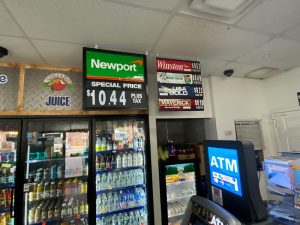
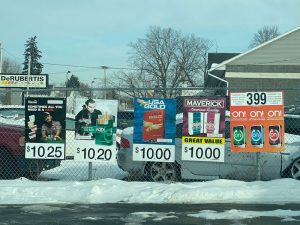
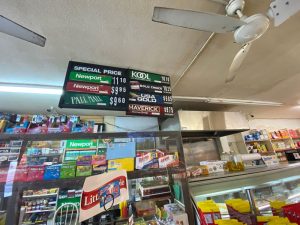
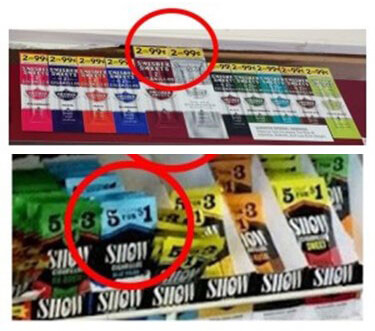
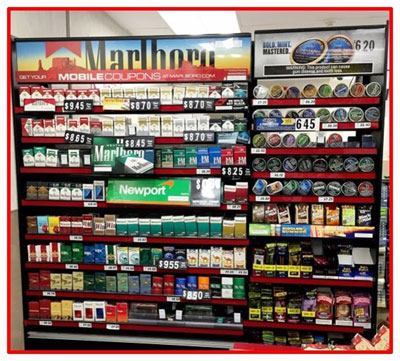 To the left is a typical tobacco product display. If you don’t use tobacco, you may not even notice, but kids do. Kids see. Kids notice. Kids remember. In fact, kids are more than twice as likely as adults to notice and remember retail tobacco marketing.